


Making rehabilitation
and recovery visible
The Control Bionics platform captures neuromuscular signals that clinicians cannot observe with the naked eye, delivering objective, real-time data on muscle activation, fatigue, and recovery progress across stroke, spinal cord injury, as well as other post-injury and operation recovery, and neurological rehabilitation programs.
Data doesn’t replace clinical judgement.
It makes it more defensible
Rehabilitation has always relied on what clinicians can observe: movement, range, response. But the signals that determine recovery outcomes happen beneath the surface, in the neuromuscular activity that precedes and drives every movement the patient makes.
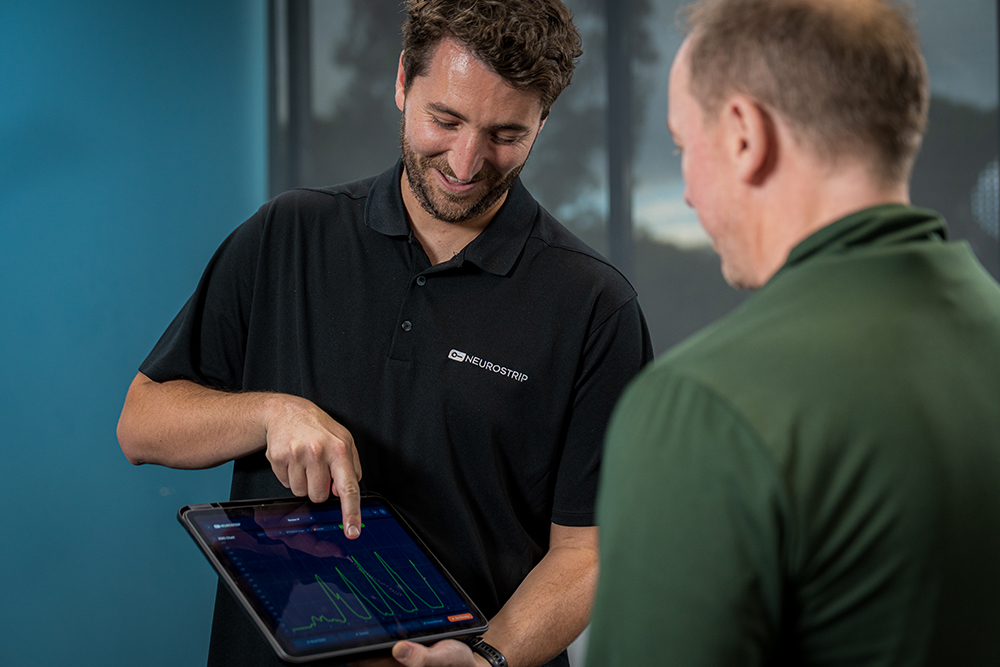
The Control Bionics platform makes those signals visible. By capturing real-time sEMG data non-invasively, it gives clinicians objective insight into muscle activation, coordination, and fatigue, enabling therapy guided by data, not intuition alone.

Objective assessment
Quantify muscle activation and coordination with precision that observation alone cannot provide.
Real-time progress tracking
Monitor patient recovery session by session with data that documents improvement and identifies plateaus.
Personalised protocol adjustment
Use live neuromuscular data to tailor therapy intensity, timing, and focus to each patient's actual response.
Outcome documentation
Generate objective, defensible records of patient progress for clinical reporting, funding bodies, peer review and just as importantly patient engagement.
Designed to work within your workflow.
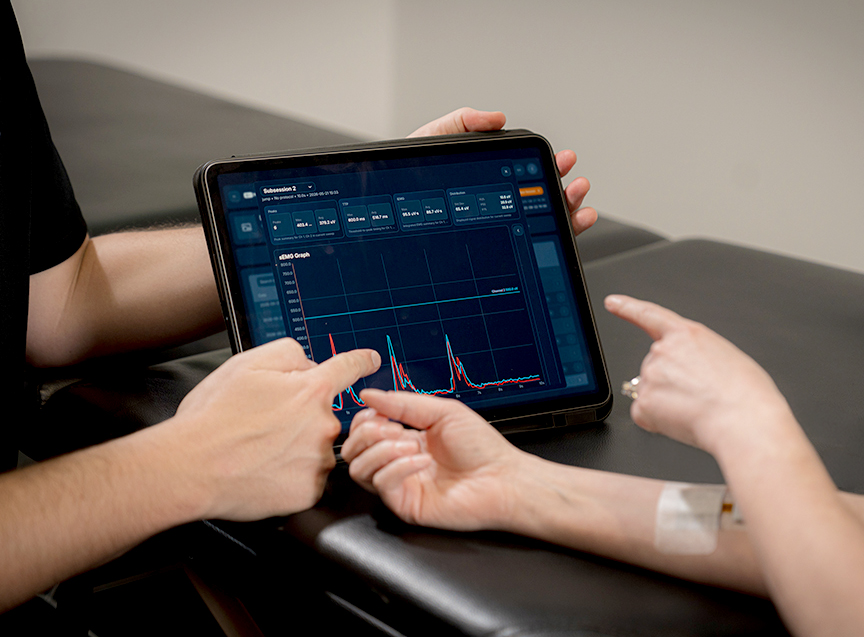
The Control Bionics platform is designed to work within existing rehabilitation workflows, not replace them. NeuroStrip sensors apply in seconds, require no gels or wires, and capture data continuously without interrupting the therapy session.
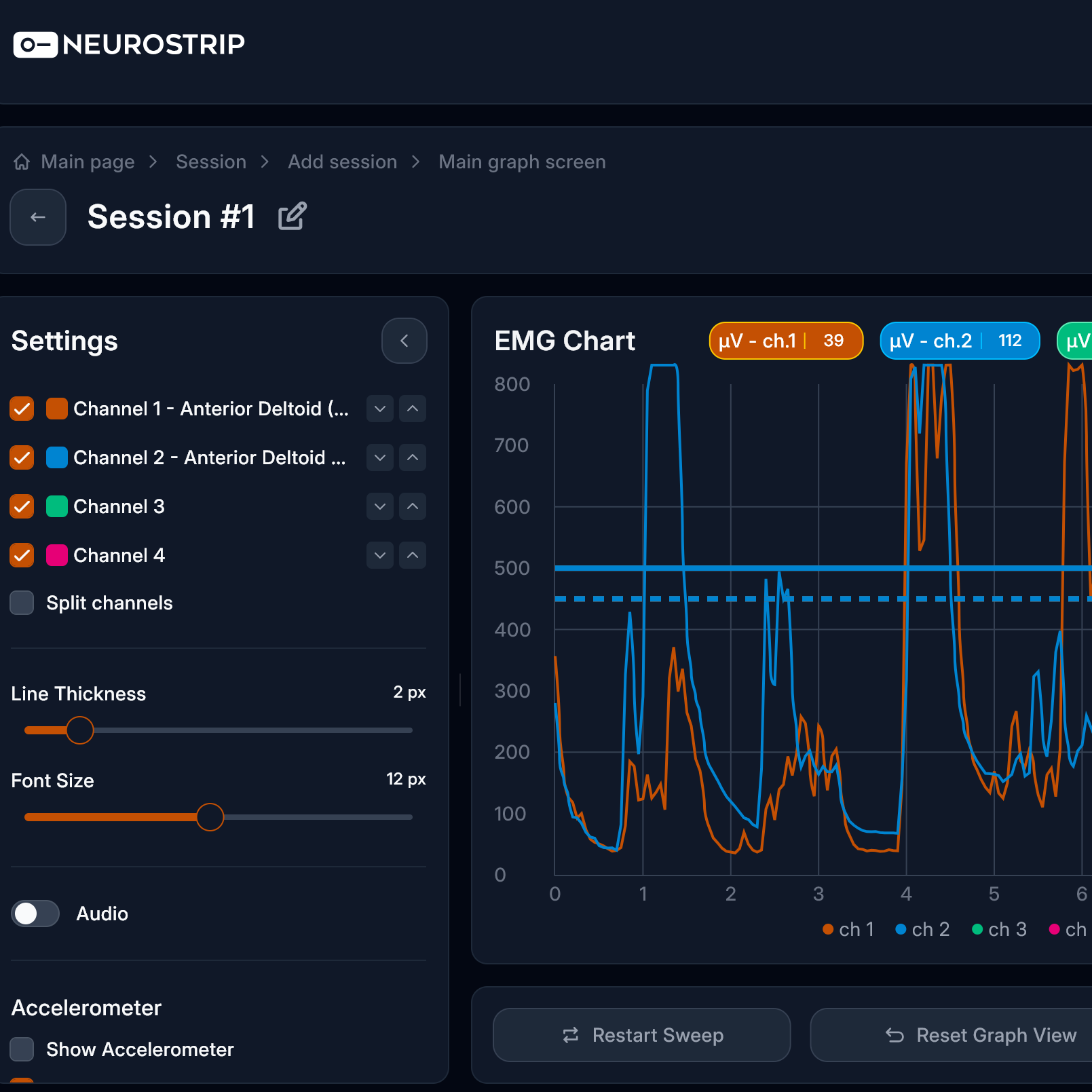
Data is accessible in real time through the cloud based NeuroStrip application, with adjustable display settings, session notations, and exportable records that integrate with clinical documentation requirements. Up to four sensors can be monitored simultaneously across multiple muscle groups.
What the platform delivers for rehabilitation.
Improved patient engagement
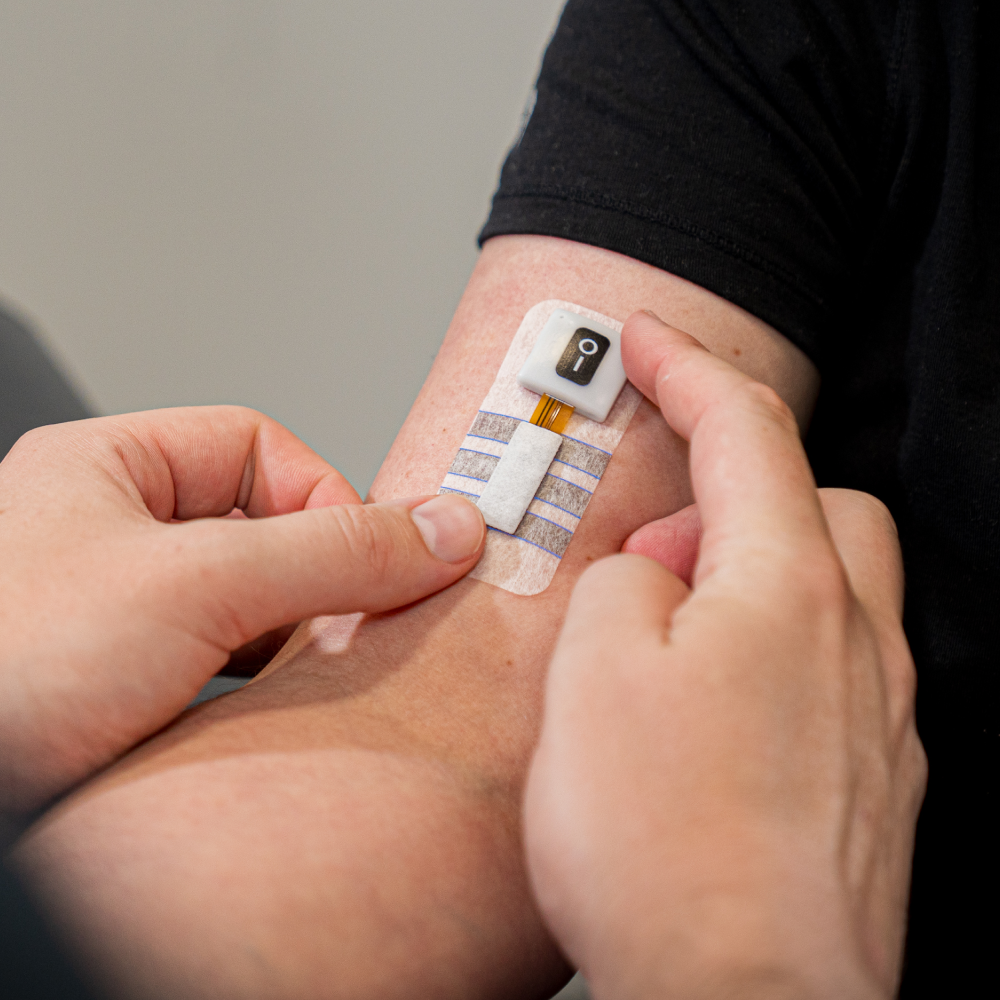
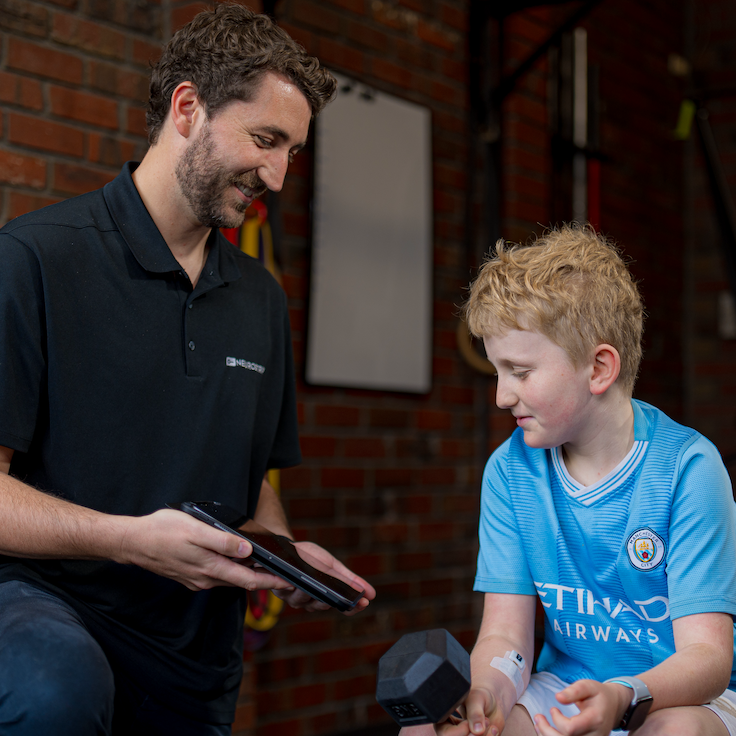
Patients can see their own neuromuscular activity in real time, creating visible feedback that motivates engagement, reinforces correct movement patterns and sees patients return to build on the measurable progress.
Remote monitoring capability
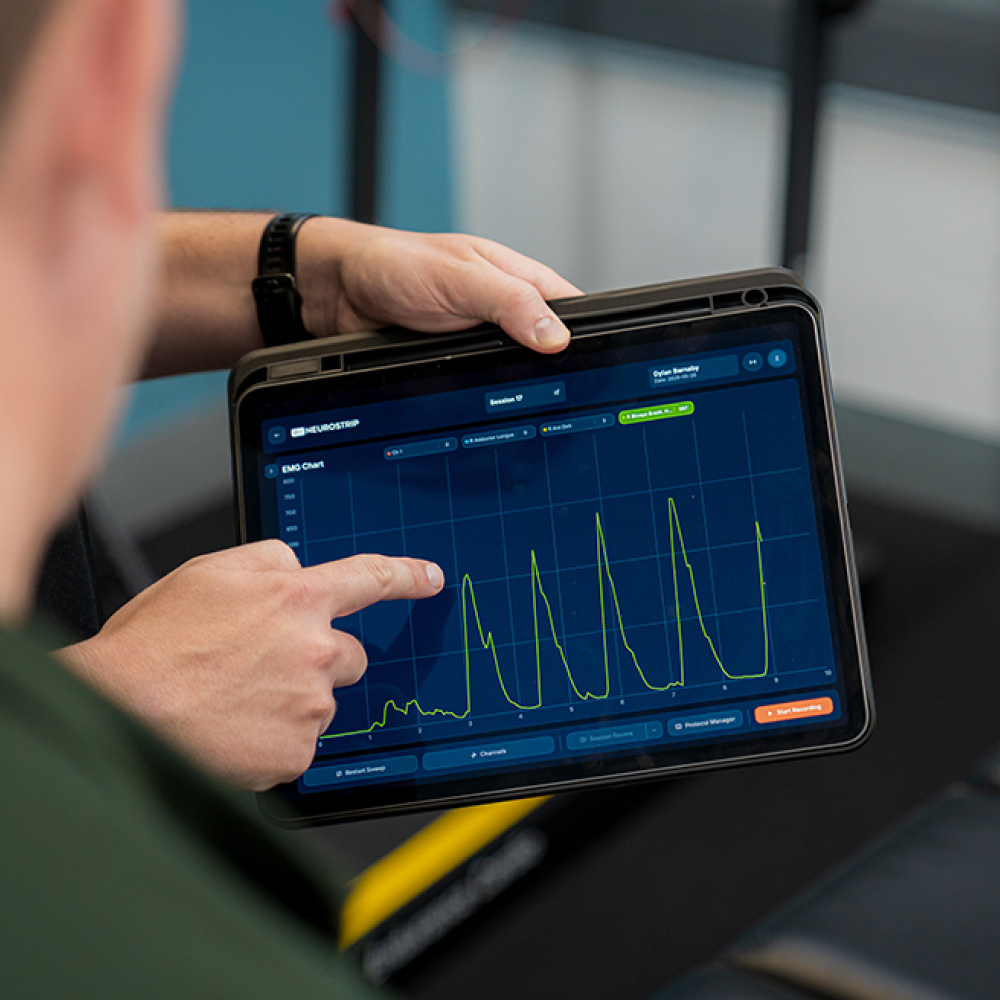
Compact, wireless, and deployable outside the clinic, supporting home-based rehabilitation and teletherapy without compromising data quality.
Reduced clinical burden
Objective data replaces time-consuming manual assessment, freeing clinicians to focus on therapy rather than documentation.
Evidence-supported outcomes
Recovery progress backed by objective neuromuscular data, supporting funding applications, peer review, and clinical governance requirements.
Clinician Story
“The NeuroStrip system is the most impactful advancement I’ve seen in 30 years. It empowers therapists to go beyond basic strengthening and uncover hidden deficits in muscle recruitment, especially in patients who have stopped progressing.”
Steve, PT (30+ years experience, Houston Rehabilitation Institute)
Case study 1
Vertical Jump Performance
Athlete Profile
Senior high school basketball player. Goal: increase explosive power and vertical jump height to improve on-court performance.
NeuroStrip impact
NeuroBounce jumping program using NeuroStrip EMG tracking, commenced September 2022. Neural feedback enabled targeted muscle activation training to increase recruitment and explosiveness..Results
Vertical jump increased by 5–6 inches. Measurable improvements in rebounding, finishing, and dunking performance on court.Patient Quote
"After seeing his results I would absolutely tell people to put their kids into this program." — Britton Johnsen, Former NBA Player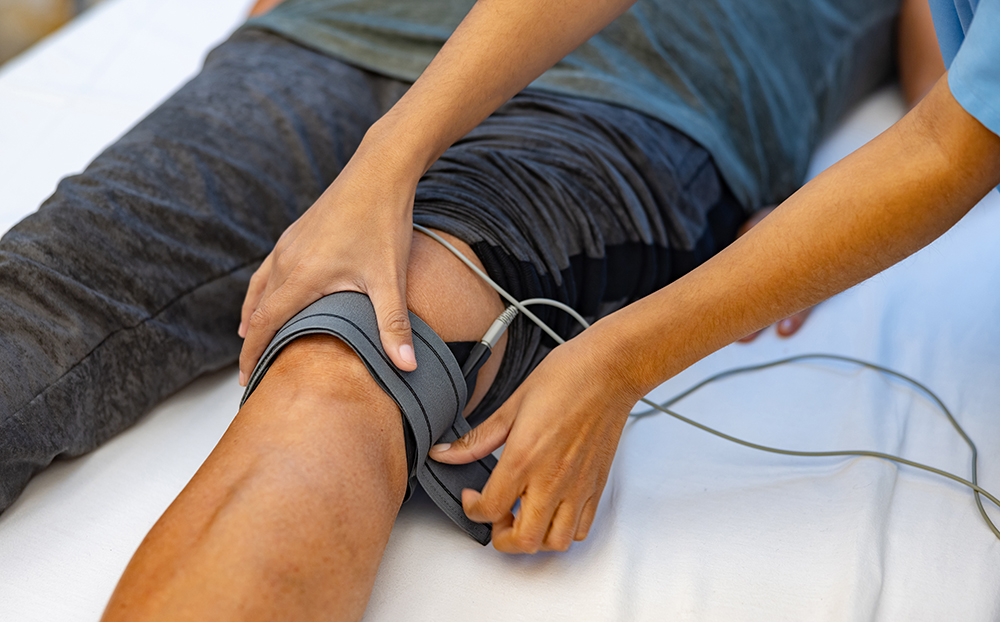
Case study 2
ACL Recovery with BFR Integration
Patient Profile
Similar post-op ACL presentation with deficits in quad activation during sport movements.
NeuroStrip impact
NeuroStrip combined with Blood Flow Restriction training. Squat jump EMG improved from 150μV to 280μV. One-legged mini squat EMG rose from 150μV to 300μV. BFR added an extra 50μV consistently across exercises.Results in 3 Visits
Single-leg hop improved by 6 inches. Sprint time dropped from 6.0 to 5.0 seconds. KOS score increased from 77 to 84. Patient transitioned to independent gym training.Patient Quote
"I saw a huge improvement in just a few days and an increase in muscle activation. I strongly encourage others to do the same."
Case study 3
Stroke Rehabilitation: From Wheelchair to Walking
Patient Profile
Stroke with right middle cerebral artery clot. Flaccid left lower extremity after 5 months of conventional rehabilitation. Wheelchair-bound with maximum assist required for transfers.
NeuroStrip Rehabilitation Journey
Initial quad activation: 25μV. Gradual increase to 100μV using operant conditioning. Standing EMG improved to 180μV. Combined with neuromuscular stimulation for accelerated strengthening.Functional Outcomes
Patient progressed to full weight-bearing without hyperextension. Walked 20 feet with hemi-walker. Improved hip flexion enabled independent leg advancement. Became an independent ambulator using a quad cane.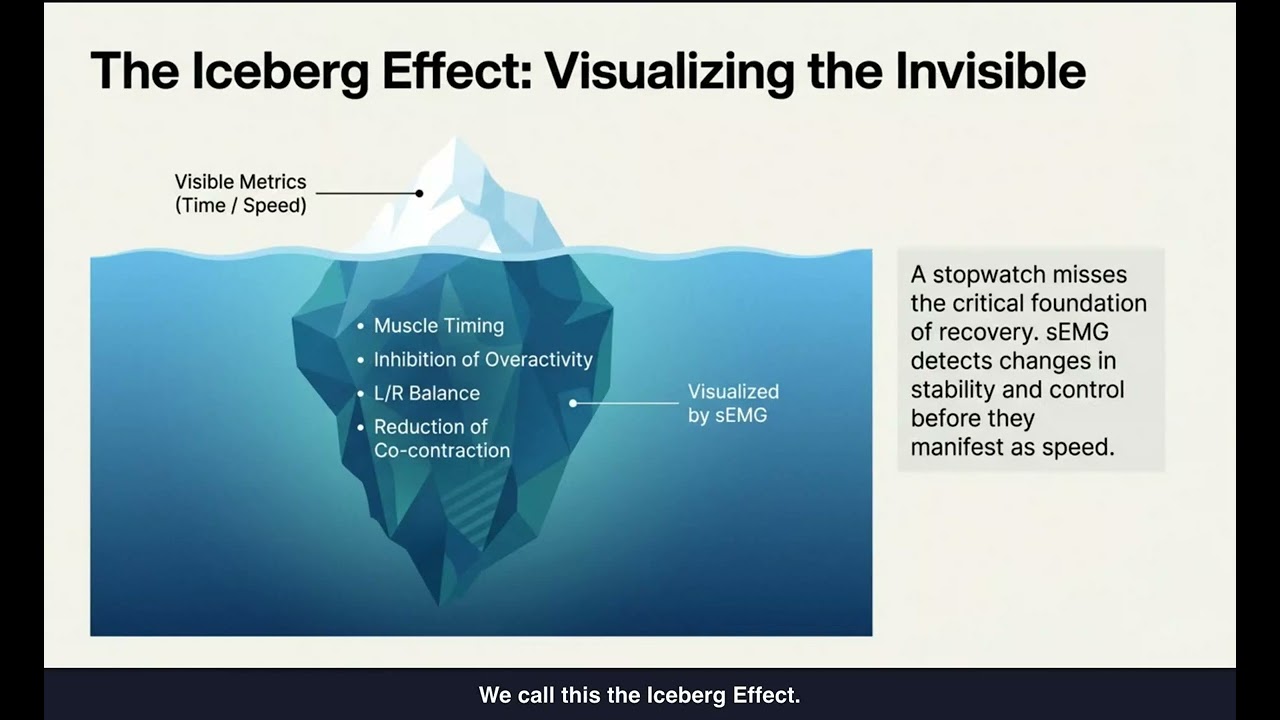
Peer-reviewed clinical evidence
sEMG biofeedback in rehabilitation is supported by more than 70 published peer-reviewed research across multiple clinical conditions and patient populations.
Validated signal fidelity
Medical-grade signal accuracy maintained across clinical environments, with noise rejection validated for real-world rehabilitation settings. (see attachment)
Rapid deployment
Sensors apply in seconds with no gels, wires, or calibration delay, minimising setup time in busy clinical workflows.
Multi-condition application
Deployed across stroke, spinal cord injury, neurological rehabilitation, dysphagia, and musculoskeletal recovery programs.
See the technology in action.
Request a demonstration or contact our team to discuss how Control Bionics surface EMG technology can be deployed in your performance or rehabilitation program.