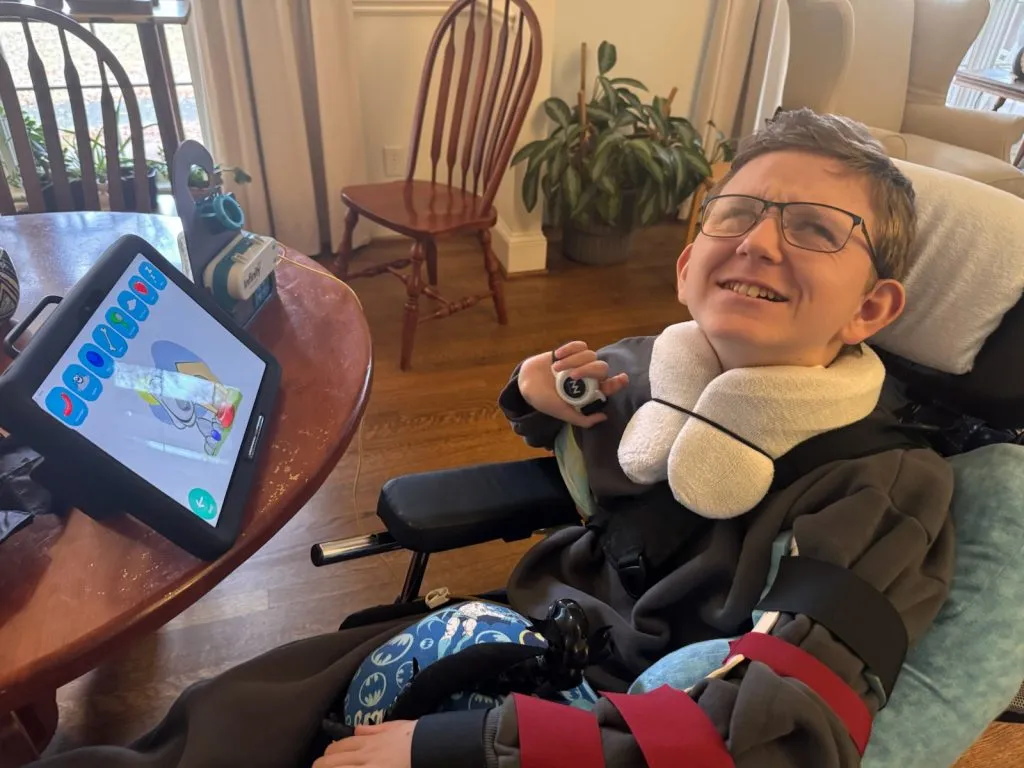
For most teenagers, communication is effortless—a quick joke, a text to a friend, or sharing what’s on their mind. For Shepherd Lynch, it’s been a very different journey. After a brain injury in 2016, Shepherd’s speech no longer allowed him to communicate everything he wanted to. For many things, he was dependent on the yes/no questions his parents asked. But recently, everything changed.
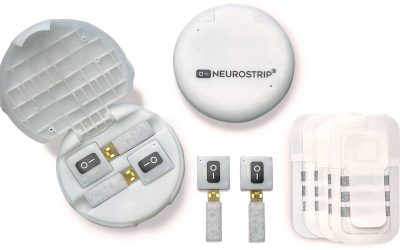
Shepherd recently received a NeuroNode Duo communication device of his own. The EMG (electromyography) and spatial technology in NeuroNode provided something that his team had not found before—consistent access to the vocabulary on a communication device. It’s not just technology; it’s a pathway to greater independence.
I recently talked to Shepherd’s mother, Victoria Lynch, about the process of getting the NeuroNode Duo. Here are a few highlights!
Kristin:
What was your first reaction to the NeuroNode when Wendi introduced it? (Wendi McMillan is Shepherd’s speech-language pathologist)
Victoria:
We had seen the NeuroNode years ago and loved the possibility of it for Shep. When Wendi introduced it we were hopeful it would be a good fit for Shep and could open communication doors for him that had not yet been unlocked.

Shepherd with Wendi McMillan, his speech-language pathologist
Kristin:
What was the most frustrating part of the process of getting the device? What was the most helpful?
Victoria:
The trial device was very helpful. It was hard to give it back at the end of the loan but it confirmed that it was the right tool. After returning the trial, it was frustrating to wait through the funding process.

Click on the image to learn more about the funding process with Control Bionics
Kristin:
What did you see in Shepherd that helped you know that the NeuroNode was right?
Victoria:
When he is using the NeuroNode, we can tell that it is “clicking” for him by his smiles and the way he is making choices. He’s expressing himself more and more when using the NeuroNode and it’s such a delight to see him find his way with it
Kristin:
Where do you see Shepherd going from here?
Victoria:
Moving forward, we hope to see Shep become more independent in initiating conversation and having his own way of playing games and being entertained – all very teenage boy things!
If Shepherd’s story resonates with you, and you’re wondering if a NeuroNode could make a difference for someone you care about, we’re here to help. Reach out to learn more about options, trials, and support for funding.